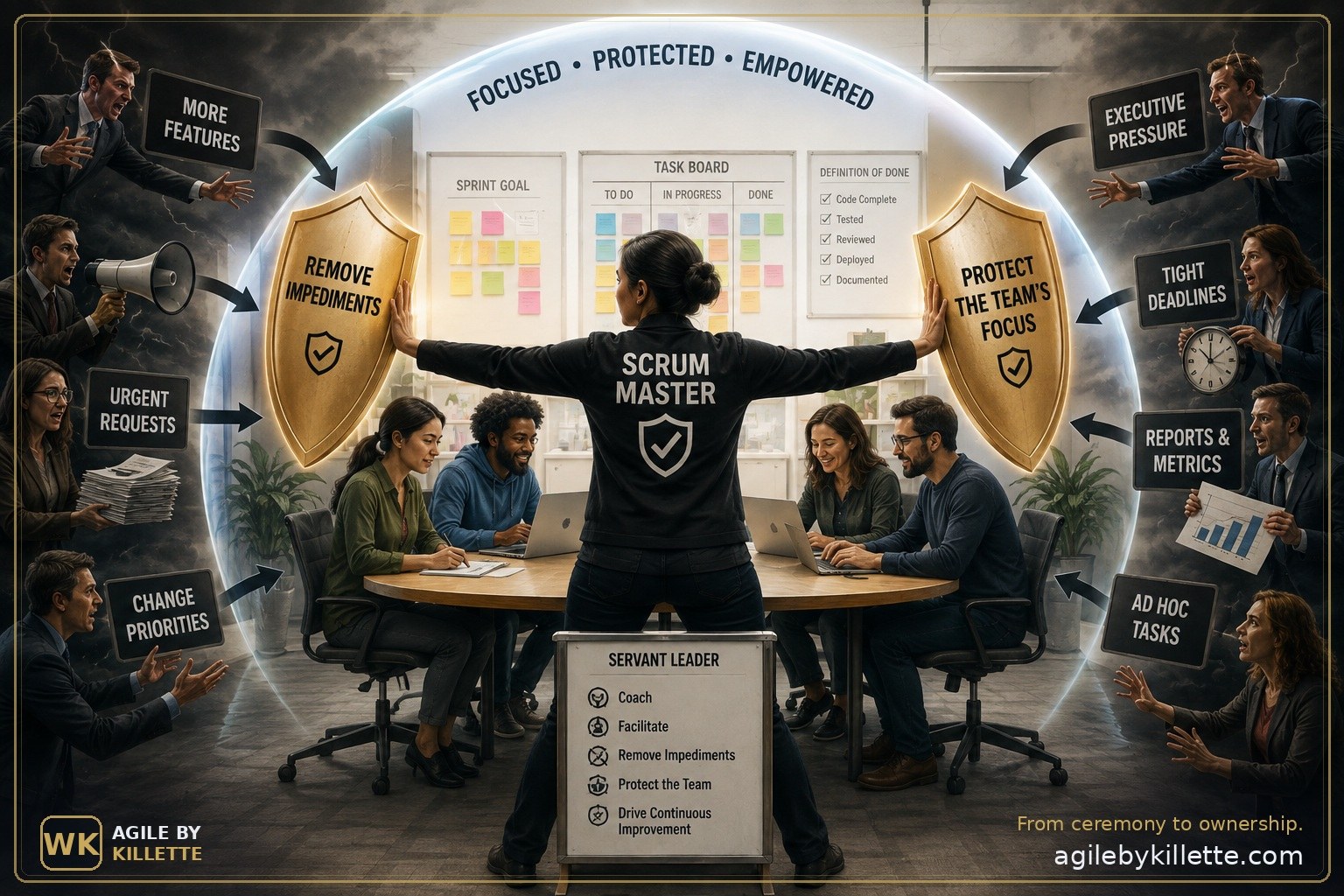
Gaining a new team's trust is one of my top priorities the moment I join. Not the board, not the burndown — the trust. Twenty years of mostly-remote assignments taught me it's earned in the first few calls, in small, deliberate moves. Here they are.
Earning trust, from the first call
- Be genuinely welcoming.When you facilitate that first call, acknowledge each person by name as they join. It costs ten seconds and it tells everyone the room is theirs too.
- Promise total transparency — and leave no doubt.Tell the team you will always be straight with them. Then be. The promise only counts the first time you keep it under pressure.
- Name your job as protector.Say out loud that one of your roles is to protect the team — and commit to it. People need to know the shield exists before they'll trust it.
- Listen, observe, collaborate — mostly listen.Observe before you advise. The answers you'd hand them are worth less than the ones they find with you.
- Everyone's concerns are important.Not just the loudest voice, and not just the senior one. The quiet objection is usually the expensive one.
- Don't talk over anyone.Space is respect. Interrupting a person once teaches the whole team what your listening is worth.
- Be timely when you owe them an answer.You're normally working inside a two-week time box. A slow reply doesn't just annoy people — it costs real ground in a sprint that can't get it back.
- Genuinely express your care and interest."How are you feeling this morning?" … "Sounds like that cold is finally letting up." … "How's the baby doing — she's got to be about six months now, growing like a weed I bet." Remember the details. The details say I see you.
- Have fun and be interesting.Nobody trusts the person who makes the meeting heavier. Bring some life with you.
- Let your soft skills shine as much as the technical ones.Process expertise gets you in the room. The human skills are what make the team let you coach them.
When a team member is struggling
We talk about it — never in shame, always "how can I help?" But here's what "how can I help" really means: how do I get you what you need?
Protecting the team isn't shielding it from accountability. It's making sure every member has what they need to carry their part. You remove the obstacle, not the person. Nobody gets blamed, nobody gets left behind — and that's exactly how the team keeps its ownership, together.
Why protection is the shortcut to trust
Protection isn't a separate duty from trust — it's one of the fastest ways a team learns to trust you. When people see you take the hits — block side-door work, absorb executive pressure, refuse to let anyone get blamed or left behind — they stop bracing and start trusting. The shield earns the trust.
That's also why the Scrum Master in the picture above carries a shield and not a brand name. The protection is the credibility. A role isn't a billboard.
Where this comes from
This isn't theory. It's what I've practiced across 20+ years of mostly-remote assignments — and what I teach pro bono, mentoring new Scrum Masters as a volunteer. Coaching for pay, coaching bowlers for fun, coaching new Scrum Masters for free: same wiring, three lanes. The through-line since I was thirteen — to help.
Building trust on a team that's lost it?
If a team has been burned — by churn, by pressure, by a transformation done to them instead of with them — this is the work I do first. Let's talk about where yours is.
Book a conversation → Call 469-774-2233 Message on LinkedInEmail app didn’t open? Write to wendell@agilebykillette.com