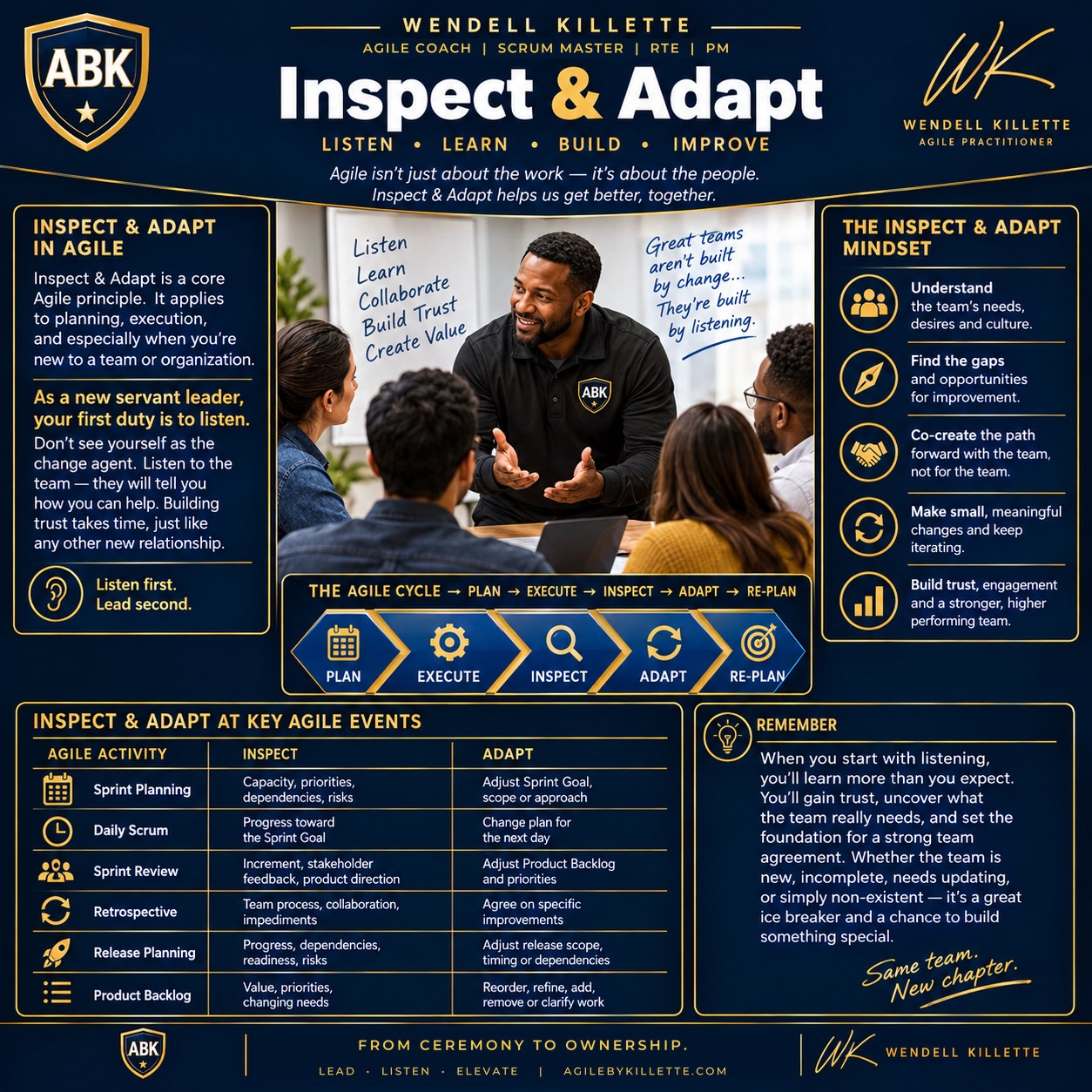
This is how I work, not a concept. Every team I join gets the same opening move: I listen before I change anything. The team will tell you how you can help — if you give them the room to.
Your first duty is to listen
A new Scrum Master or coach is tempted to walk in as the change agent — to arrive with the fix already in hand. I don’t. Trust starts in the first few calls and keeps building through small, deliberate moves — like any new relationship — and it starts with hearing how the team actually works before suggesting how it should. The moves I use are in Trust & Protection →
The Inspect & Adapt mindset
- Understandthe team’s needs, desires, and culture — before touching the process.
- Find the gapsand the opportunities for improvement the team already senses but hasn’t named.
- Co-create the pathforward with the team, not for the team. Ownership starts here.
- Make small, meaningful changesand keep iterating. Small moves the team can see working beat a big-bang rollout.
- Build trustengagement, and a stronger, higher-performing team.
The cycle never stops
Inspect & Adapt at every event
| Agile activity | Inspect | Adapt |
|---|---|---|
| Sprint Planning | Capacity, priorities, dependencies, risks | Adjust the Sprint Goal, scope, or approach |
| Daily Scrum | Progress toward the Sprint Goal | Change the plan for the next day |
| Sprint Review | Increment, stakeholder feedback, product direction | Adjust Product Backlog and priorities |
| Retrospective | Team process, collaboration, impediments | Agree on specific improvements |
| Release Planning | Progress, dependencies, readiness, risks | Adjust release scope, timing, or dependencies |
| Product Backlog | Value, priorities, changing needs | Reorder, refine, add, remove, or clarify work |
Same team. New chapter.
When you start with listening, you learn more than you expect. You gain trust, uncover what the team really needs, and lay the foundation for a strong team agreement.
Joining a new team — or leading one through change?
I start by listening, then co-create the path forward with your people. Let’s talk about where your teams are today.
Book a conversation → Call 469-774-2233 Message on LinkedInEmail app didn’t open? Write to wendell@agilebykillette.com